Social Security Survivor Benefits Should Be Part of Your Retirement Planning
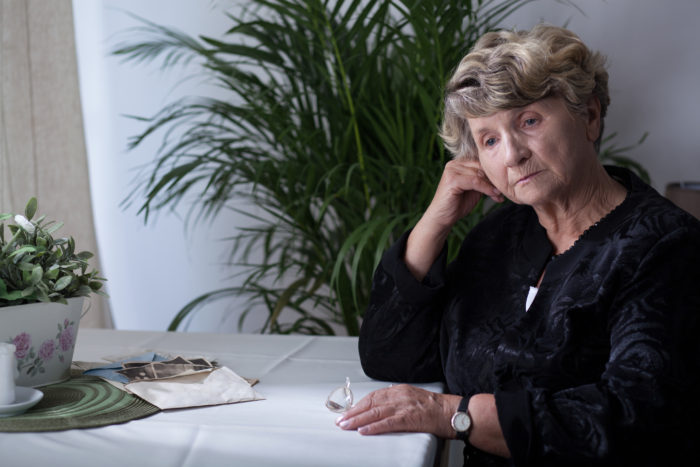
The death of a loved one is traumatic. No question about that. And for those dependent on the deceased for financial support, the aftermath can prove devastating. Social Security survivor benefits are a crucial safety net for families, so understanding the eligibility rules and how to apply for them is important.
Unlike many Social Security matters, applications for survivor benefits cannot be submitted online. There are several decisions that need careful consideration during the application process, and it is recommended that consultation with a Social Security advisor be obtained to ensure the correct interpretation of the rules governing survivor benefits.
Basic Survivor Benefit Eligibility
Survivor benefits are available to the surviving spouse and dependent children up to age 18, or age 19 if still in high school. In addition, adult disabled children qualify if disabled before age 22, and dependent parents may be eligible if they rely on you for more than 50% of their support.
Surviving spouses must have been married at least 9 months, except in cases of accidental death. Surviving divorced spouses who were married at least 10 years are treated the same as widows or widowers unless otherwise stated.
Surviving spouses may apply for benefits as early as age 60, or age 50 if disabled. There is also a spousal benefit for having a child in care. Surviving spouses caring for a child under age 16 or an adult disabled child can apply at any age, and the length-of-marriage rule does not apply to these situations. Married spouses may continue these benefits until age 70 if their own benefit is higher at that time. For ex-spouses, they must be under age 62 to claim, and their eligibility ends at age 62. If an ex-spouse is receiving a child in care benefit, it affects the family’s maximum; this is the only scenario in which an ex-spouse’s benefits impact the family’s maximum.
When a spouse passes away, the surviving spouse retains only the higher of the two benefits available to them. If the surviving spouse has not yet reached their full retirement age (FRA), they are not able to receive 100% of the deceased spouse’s Social Security benefit. Also, if the surviving spouse remains employed, they are subject to an earnings test until reaching their full retirement age.
A surviving spouse may become eligible for survivor benefits at age 60; however, if they claim at that time, they will only receive 71.5% of their deceased spouse’s benefit, and it is
a permanent reduction. They are also subject to an earnings limit of $24,480 for 2026. If they exceed this limit, their benefit will be reduced by $1 for every $2 they exceed. If they reach their FRA in 2026, they can earn up to $65,160 before the month they reach it. The month you reach your FRA, the earnings limit ends.
Complicating Factors
There are instances when a surviving spouse can max out their survivor benefit before they reach their FRA. There is a Social Security rule known as “Rib Lim,” otherwise known as the “widows’ limit.” The widow’s limit caps the amount of the deceased spouse’s primary insurance amount (PIA, the deceased’s full retirement age benefit) that a widow can receive if the deceased spouse took their benefits early. For example, your spouse took their benefit at age 62, and their FRA was 67. Your deceased spouse was only receiving 70% of their PIA. You can only receive 82.5% of their PIA. Consequently, in this example, it is to your favor, as it is a 12.5% increase. The result is that you will max out your survivor’s benefit way before your FRA. Using this example, where the spouse was born in 1962, you would reach your maximum survivor benefit at 62 and 9 months. The problem is that if you are still working, you are subject to the earnings limit, and if you are exceeding the limit, you cannot take it at this time. You still may have to wait until your FRA to claim it.
A surviving spouse also has the option to claim one benefit first, while delaying the higher benefit until later. The survivor benefit quits growing at your FRA, while your own benefit continues to grow until age 70. For example, your own benefit will never exceed your survivor benefit. You can take your own smaller benefit first and delay taking your survivor benefit until your FRA. Or vice versa: take your smaller survivor benefit first, and delay taking your own benefit until it becomes higher.
The Importance of Receiving Competent Guidance
The spouse earning the highest benefit will determine the amount of Social Security the surviving spouse will have to live on. You have options, and it pays to know what they are, especially since the rules are subject to change. The AMAC Foundation maintains a staff of trained and accredited Social Security Advisors available to help you at this difficult time, with no fee charged for this service. Call and speak with one today at (888) 750-2622 or email your questions to ssadvisor@amacfoundation.org