
Why doesn’t COLA Keep up with Inflation? - AMAC Foundation
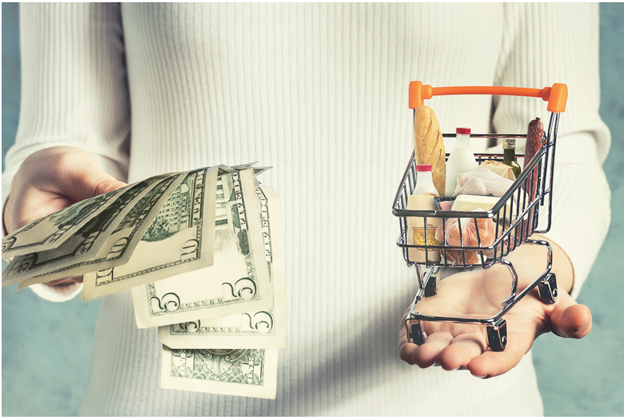
It happens every year. Here at the AMAC Foundation’s Social Security Advisory Service we start receiving questions about next year’s Cost-of-Living Adjustment (COLA) in mid- to late-September. Sometimes the inquiries come from reporters seeking inside information to include in an article about the topic; or sometimes from those who read the inevitable early media estimates about what the coming year’s COLA may be; and frequently from Social Security recipients who are sincerely worried about paying their bills next year. But nearly all agree on one thing – Social Security COLA doesn’t adequately keep up with the inflation they are experiencing in the real world. And they are right.
Some COLA History and How It Works
Social Security’s Cost-of-Living Adjustment methodology was created in 1973 to automatically adjust benefits to keep pace with inflation. The method used looks at the Consumer Price Index for Urban Wage Earners and Clerical Workers (called the “CPI-W”) during the 3rd quarter of the current year (July – September) and compares that to the same period last year. The year-to-year numeric difference in that index translates to a percentage, which becomes COLA for the following year. The federal government does that computation each year in early October and announces next year’s COLA increase on about the 15th of that month. And that is when the inquiries and comments begin in earnest. So why is something so positive as a benefit increase viewed so controversially by some? Because it’s viewed as insufficient to offset rising prices. Let’s look at why.
First, the COLA methodology measures inflation which has already been experienced. Whatever the COLA percentage for next year might be, the inflated prices COLA is meant to offset have already been paid by consumers for many months preceding the arrival of any monetary gain in benefits. Thus, the money for inflated goods or services has already been spent and cannot be recovered because ongoing inflation mitigates the buying power of the higher Social Security payment. Yes, we get more money, but we cannot recover money already spent and must still pay ever increasing prices for the goods we now buy. We sometimes hear that “inflation is easing” but that is misleading because it doesn’t mean that consumer prices are going down, it simply means they aren’t rising as fast as they were before.
How Medicare Premiums Affect COLA
Inflation affects everything, including healthcare costs. And inflated healthcare costs usually translate to higher Medicare premiums that each person on Medicare Part B must pay. Fortunately, Social Security’s “hold harmless” rule says that a net benefit payment cannot go down as a result of an increase in the standard Medicare premium, which is good news if the standard Medicare premium goes up (as it usually does with inflation). But Medicare Part B premiums are deducted from Social Security, and there’s nothing to prevent Social Security from using your COLA to pay for an increase in your Medicare premium. What that means is that you will, indeed, get a Social Security COLA increase, but some (or sometimes all) of that increase will be used to pay for your new Medicare Part B premium, leaving you with, essentially, little or no extra COLA money to pay for inflated prices for the goods you buy..
Also, “hold harmless” doesn’t extend to other benefit situations. Social Security has a rule that one’s net monthly benefit can never be less, but, as always, there are exceptions to that rule. COLA will ALWAYS increase the GROSS Social Security payment for every beneficiary, but the net payment someone actually receives can go down, even in times of high inflation. Typically, if someone is affected by the “IRMAA” provision (Income-Related Monthly Adjustment Amount, which affects their Medicare premiums), “hold harmless” will not apply, and their net Social Security payment can actually go down, making it even more difficult to deal with the insidious effects of inflation.
Recent COLA Perspective
The 2025 COLA increase was set at 2.5%. This may seem inadequate, especially when compared to the much higher cost of living for the past few years. But average annual COLA over the past two decades has been about 2.6% per year, so this year’s COLA actually heralds a return to normal for Social Security recipients. The problem is that “normal” doesn’t actually keep up with inflation that those of us on Social Security deal with every day and many beneficiaries don’t even see the full COLA increase, making their life increasing difficult.
For example, if you claimed a $1,500 Social Security benefit 10 years ago, starting in 2025 your gross monthly Social Security payment would be about $1,977 per month due to annual COLA. But, if you’re on Medicare, you net SS payment will be reduced by your 2025 Medicare premium. The standard Medicare Part B premium has risen nearly 18% over the past 5 years and is estimated to increase by about $10 (to $185 per month) next year. That amount will be deducted from your Social Security, leaving you with only about $1,792. In other words, if your 2025 COLA increase adds $48 to your gross Social Security payment, after Medicare you’ll only be left with about $38 to pay those inflated prices. For perspective, food prices have, on average, risen about 26% over the past 5 years, which means the same food you paid $100 for 5 years ago will cost you about $126 today. And add that to other inflated prices for transportation, housing, apparel, recreation, etc., and you will likely see little actual money in your pocket from your COLA increase.
Thus, as important as COLA is to your Social Security income, inflation largely consumes COLA each year, making it impossible to get ahead. Remember, COLA is calculated “after the fact” – you’ve already paid inflationary prices long before you receive any COLA increase. And that’s why COLA cannot (and does not) keep up with actual inflation. Nevertheless, it’s certainly better than no Social Security COLA increase at all. Over time, your Social Security payment would be hundreds of dollars less without it.
(Source: AMAC Foundation Social Security Advisory Staff)
Notice: The link provided above connects readers to the full content of the posted article. The URL (Internet address) for this link is valid on the posted date; socialsecurityreport.org cannot guarantee the duration of the link’s validity. Also, the opinions expressed in these postings are the viewpoints of the original source and are not explicitly endorsed by AMAC, Inc.; the AMAC Foundation, Inc.; or socialsecurityreport.org.
I received a letter last year from the SSA. It listed every dollar amount that was stolen from my paycheck on an annual basis. If I had taken that money and put it in a very conservative IRA at 5% I would have over 4 million in the IRA account today. And that doesn’t include the 7% the SSA stole from my employer. Instead I get 3000 a month. that’s 36,000 a year. If I lived off the interest generated by the 4 million dollars at 5% I would live off of 200,000 dollares a yeaer. SSA is a scam to steal money from the working class, spend it oun the Government pet projects, and replace it with worthless IOU’s that are not marketable. If I owned a company and set up a retirement system for my employees that mirrored what is done with Social Security I would be in jail. it’s nothing more than a Ponzi scheme.
Hi Michael,
The question of taking the money contributed to Social Security and, instead, investing it has been an idea which originated in the 1940s when Social Security first started paying retirement benefits. Fact is, that mandatory contributions for Social Security and the monthly benefits which occur therefrom actually lifts millions of Americans out of poverty every day. Without SS, about 37% of U.S. seniors would be living in poverty! And, left on their own, most Americans would not invest the equivalent SS contributions as you suggest. However, those who can afford to do so always have the option to invest discretionary funds in the public markets as they see fit and can afford. Also, no Social Security money has ever been “stolen” by any politician - we have researched this very carefully and can assure you that no SS funds have ever been stolen. Indeed, excess SS contributions (that not needed to pay monthly benefits) has for years been invested in special issue, interest bearing government bonds. In 2025, those bonds returned about $69 billion to the Social Security Trust Funds (which still contains about $2.5 trillion). If you believe that Social Security is a scam, please review this article: /ask-rusty-why-change-social-security-now-its-a-working-ponzi-scam/
We understand your concerns, but please rest assured that we have very carefully reviewed all myths about Social Security and can assure you they are, indeed, myths.
Best regards,
Russell Gloor
Certified Social Security Advisor
The AMAC Foundation
While I understand the concept of how the cola is calculated (on the difference between the the last two years prices ie: 2025-2024=2026 %), this still doesn’t explain why the cola is so low. If, as stated in the article, $100 groceries now costs $126, shouldn’t social security cola be much higher? That plus rent and utilities hikes should give us a much higher percentage than the 2.5/2.6% we’re currently getting. Shouldn’t it be closer to 20% or more? As it is, more and more of us are contemplating using candles, fireplaces (if we can get the wood), etc… effectively throwing our way of living back 70-100 years… We’re also eyeing the catfood flavors and wondering whether the paté is palatable.
Tania:
Thanks for the comments. I appreciate your concern for the inadequacy of COLA…many (perhaps most) seniors raise the same question. As noted in the article, the actual COLA applied to benefit payments beginning in January is a net adjustment, with the offsetting impact of Medicare Part B dragging the net number downward. Nevertheless, the use of CPI-W as the metric doesn’t, in the opinion of many, adequately reflect the costs that seniors face. (I’ll append a technical explanation of how CPI-W works to this message.
Recognizing that the COLA process does not adequately reflect Social Security’s progressive intent, AMAC has included in its Social Security Guarantee (see amac.us/social-security-guarantee) a proposal to redistribute the annual COLA adjustment dollars using an “average dollar” calculation vs an “average percentage” calculation. This approach would increase the dollar value of the adjustment for those with benefits below the average, and thus should help lessen the loss of buying power for the most vulnerable.
Thanks again for the comment.
Gerry Hafer, Social Security Advisor
AMAC Foundation, Inc.
(PS. Here’s the “technical” CPI-W note I mentioned: The Consumer Price Index for Urban Wage Earners and Clerical Workers (CPI-W) is the current method for determining inflation. CPI-W is a statistical average of the price change for a basket of goods and services based on the buying habits of urban wage earners. BLS surveys households in urban areas to calculate the price change in both product groups and geographic regions to create primary indexes that are then combined to develop regional and national indexes. The national index is the Consumer Price Index for all urban consumers (CPI-U). The eight major product groups are food and beverage, housing, apparel, transportation, medical care, recreation, education and communication, and other goods and services. These groups are calculated in 23 metropolitan areas determined by the Census Bureau. CPI-W is derived from CPI-U by limiting the survey data to price changes seen by households in which at least half of the household income comes from clerical or wage occupations and at least one household member was employed for 37 weeks. Because CPI-W is based on wage earners, the behaviors used to calculate the basket of goods and the related price changes are biased by wage income changes.
CONFIDENTIALITY NOTICE: The contents of this message are confidential and are intended solely for the use of the person or entity to whom the message was addressed. If you are not the intended recipient of this message, please be advised that any dissemination, distribution, forwarding, printing, copying, or use of the contents of this message, and any attached documentation, is strictly prohibited. If you received this message in error, please notify the sender. Please also permanently delete all copies of the original message and any attached documentation. The opinions and interpretations expressed in this message are the viewpoints of the message’s author, a trained advisor accredited under the National Social Security Advisors program of the National Social Security Association, LLC (NSSA). The author, the NSSA, and the AMAC Foundation are not affiliated with or endorsed by the United States Government, the Social Security Administration, or any other state government.
AI EVEN SAYS THAT COLA “OVERSTATES INFLATION”.
COLA IS A SYSTEM DESIGNED TO MAKE SS RECIPIENTS POORER.
SO AI LIES