
Senate Budget Committee Deliberates on Social Security’s Future - U.S. Senate Committee on the Budget
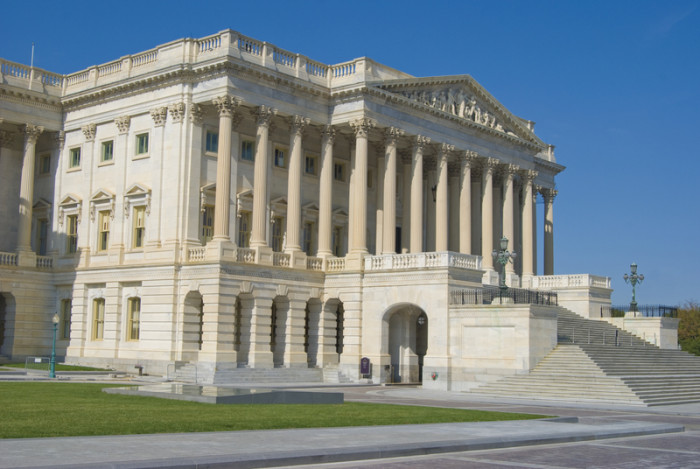
The Senate Budget Committee yesterday held a hearing focused on “Social Security: A Discussion on the Facts and the Path Forward.” Karen Glenn, Chief Actuary at the Social Security Administration, served as a panelist for the hearing, providing a snapshot of the financial crisis facing the venerable senior support program, a synopsis of the pathway from 1983 to the present, a glimpse into the years ahead, and a call-to-action for Congress and the Administration “(t)o ensure that Social Security remains solvent for generations to come.”
Ms. Glenn’s testimony confirmed the facts surrounding Social Security’s looming insolvency as reported in the 2025 Trustees Report, noting that Social Security’s “… program income is projected to be less than program cost in all future years, so that the combined trust fund reserves are projected to become depleted in 2034.” That depletion, she confirmed, would lead to a 19% reduction in benefits, or 23% based on the Old-Age and Survivors Insurance (OASI) trust fund alone. Her testimony also confirmed that the combined trust fund balances as of March 1, 2026, totaled $2.5 trillion…most folks paying attention to Social Security’s plight know that this balance stood at more than $2.9 trillion at the end of 2019.
In addition to Ms. Glenn’s testimony, the Committee heard from the Congressional Budget Office’s Chief of Long-Term Analysis Molly Dahl, who offered a more dire projection. Ms. Dahl’s testimony suggested the OASI trust fund would reach full depletion in 2032, followed by a 28% reductin in benefits. The Committee also heard from Barry Huston, Specialist in Income Security at the Congressional Research Service, who provided an extensive review of Social Security’s financial history, the issues associated with the projected funding shortfall, and a recap of past reform efforts.
Sen. Bill Cassidy (R-LA) also testified about the severity of Social Security’s financial situation and provided an overview of a “diversified investment fund” approach to addressing the long-term problem (see yesterday’s CRFB item on this topic).
Will the Problem be Fixed?
Yesterday’s Budget Committee hearing produced facts and opinions about the impending financial disaster, but no concrete steps toward a solution. Despite the potential for catastrophe, Congress can restore Social Security Solvency if lawmakers act swiftly, much like they did with the 1983 Amendments. It is imperative that corrective action be undertaken as far in advance of the trust fund’s full depletion as possible to minimize disruption. While immediate action is critical, so too is adopting the best long-term solution.
The Social Security Administration has evaluated hundreds of proposals in recent years, and a steady stream of ideas has emerged to modify the program for the 21st-century economy. It’s anybody’s guess on the timeline for congressional action, but most analysts understand that this is not a self-correcting problem, and action is needed sooner rather than later.